How Often Should You Clean Your Water Softener Brine Tank in Kenosha WI?
Salt residue, sludge, and buildup can affect water softener maintenance over time. Learn when to clean your brine tank, what warning signs to look for, and how Kenosha WI homeowners can help keep their systems working properly.
Why Your Water Softener Brine Tank Needs Attention
A water softener does more than hold salt. Its brine tank helps prepare the salt solution needed to regenerate the resin beads that remove calcium and magnesium from hard water.
As the system operates, salt residue and impurities can gradually accumulate inside the tank. Although many modern systems require relatively little maintenance, neglecting the brine tank for too long can contribute to salt buildup, unpleasant residue, and regeneration problems.
For homeowners in Kenosha, routine inspection is a simple way to catch potential issues before they affect the softener's performance. A clean tank also makes it easier to notice unusual salt consumption, hardened salt, or other signs that the system needs attention.
How Often Should You Clean a Brine Tank?
For many households, inspecting the brine tank regularly and cleaning it about once a year is a reasonable starting point. However, the ideal schedule depends on the softener model, the type and quality of salt used, water conditions, and the manufacturer's maintenance recommendations.
Some systems may need cleaning less frequently, while others may require attention sooner if residue builds up or the salt supply contains more impurities.
Check the tank every few months for unusual deposits, discolored water, or hardened salt. If everything looks normal and the system operates correctly, a full cleaning may not be necessary immediately.
Always follow the equipment manual. Certain models have specific instructions for tank cleaning, and some systems use designs that differ from a traditional separate brine tank.
Signs That Your Brine Tank May Need Cleaning
Knowing what to look for can help you decide when maintenance is appropriate.
Salt Sludge at the Bottom
Some salt products contain impurities that do not dissolve completely. Over time, these materials may collect at the bottom of the tank and form a layer of residue.
A small amount of residue does not automatically mean the softener has failed. However, significant buildup can interfere with normal operation and should be addressed according to the manufacturer's instructions.
A Hard Crust or Salt Bridge
A salt bridge forms when salt hardens into a crust above an empty space inside the tank. The salt may look plentiful even though the brine beneath it cannot dissolve properly.
This can prevent the system from producing enough brine for effective regeneration. A salt bridge is not the same as ordinary sediment, so cleaning the entire tank may not be necessary every time one forms.
Follow the manufacturer's safe removal procedure and avoid striking the tank or internal components with sharp tools.
Water Softening Performance Changes
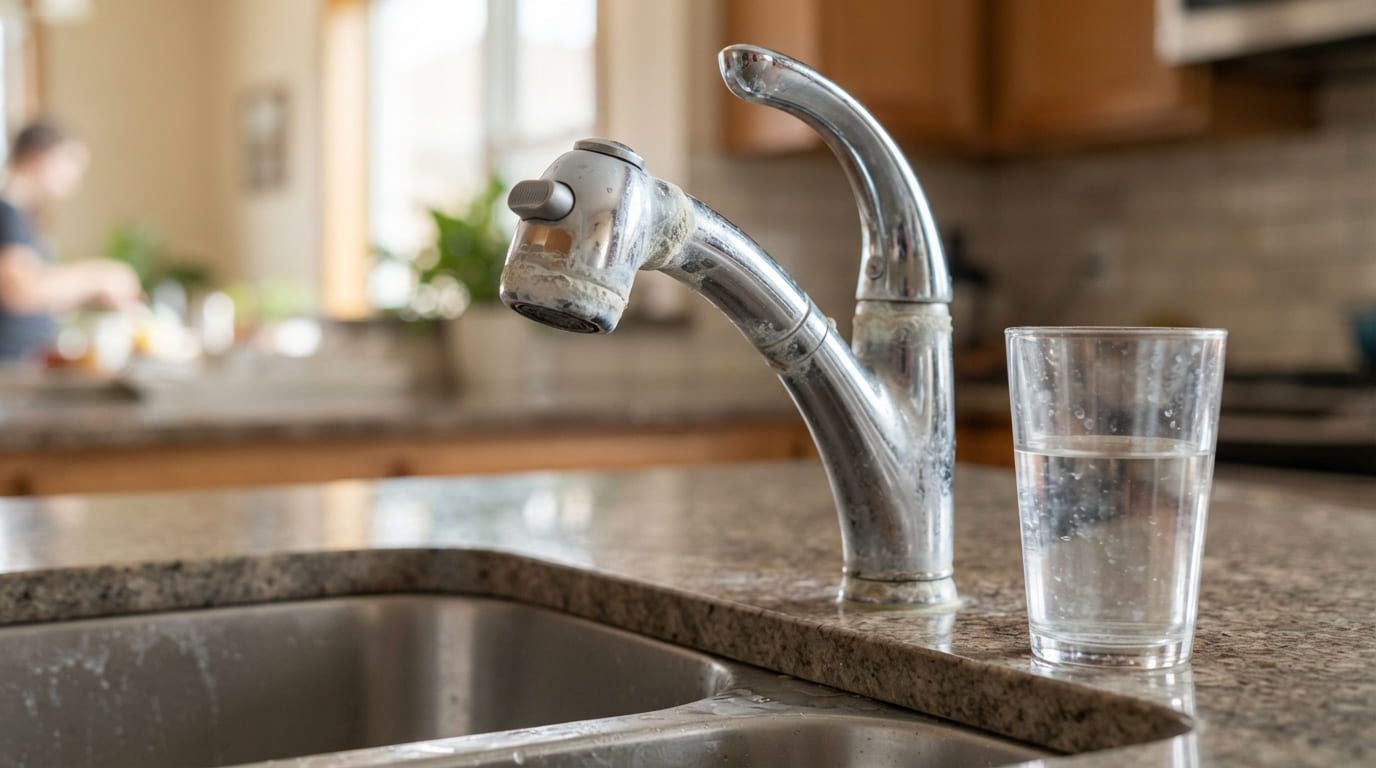
If you begin noticing mineral spots on faucets, scale on showerheads, or soap that seems harder to rinse away, the softener may not be regenerating correctly.
A dirty brine tank is one possible cause, but low salt, a bypass valve, incorrect settings, or worn resin can create similar symptoms. Check the system methodically rather than assuming that tank cleaning alone will solve the problem.
How to Clean a Water Softener Brine Tank Safely
Before starting, review the manufacturer's instructions. If your system requires manual cleaning, the general process usually involves the following steps.
- Put the system into the recommended maintenance mode. Follow the manual for shutting down or bypassing the equipment safely.
- Remove the remaining salt as instructed. Avoid forcing salt blocks or hardened material against the tank walls.
- Empty the tank carefully. Use the procedure recommended for your equipment and avoid damaging the brine well, float assembly, or other internal parts.
- Clean the inside of the tank. Use only cleaning products approved by the manufacturer. Do not mix household chemicals or use unapproved disinfectants.
- Rinse thoroughly if the instructions require it. Make sure cleaning residue is removed before the tank is returned to service.
- Refill with the recommended salt. Use the type and amount specified for your system.
- Restart the equipment according to the manual. Confirm that the system is operating normally and completes regeneration as expected.
If the tank is difficult to empty, the system has damaged parts, or you are unsure how to disconnect or restart the equipment, consider professional maintenance instead of risking damage.
Choosing the Right Salt Can Reduce Buildup
The type of salt you use can affect how much residue collects inside the brine tank. Water softener salt is available in several forms, including pellets and crystals, and different products may vary in purity.
Choose a product approved for your specific softener. Avoid using ordinary table salt or other substitutes unless the manufacturer explicitly permits them.
It is also important not to overfill the tank. Follow the recommended level and leave enough room for the system to operate as designed. Adding more salt than necessary will not automatically improve water softening, and excessive accumulation can make inspection more difficult.
Why Brine Tank Maintenance Matters in Kenosha WI
Kenosha's municipal water quality report lists total hardness at approximately 139 milligrams per liter as calcium carbonate, equivalent to about 8.1 grains per gallon. This is a measure of hardness, not a safety rating, and conditions can differ for individual properties or private water supplies.
When hardness minerals are present, a conventional water softener uses its resin to reduce calcium and magnesium. The brine tank supports the regeneration process that allows the resin to keep working.
Keeping the system maintained helps homeowners identify potential performance problems early. However, tank cleaning alone cannot correct every issue. If softened water continues to show signs of hardness, a water test and equipment inspection can help determine whether the cause is related to salt, regeneration, the resin, or another component.
When Should You Call a Water Softener Professional?
Routine inspection and basic maintenance may be manageable for many homeowners, but persistent problems deserve a closer look.
Consider professional service if your tank repeatedly develops a salt bridge, the system uses salt unusually quickly, regeneration fails, water pressure changes, or hard water symptoms continue after maintenance.
A technician can inspect the brine tank, float assembly, control valve, and resin condition. They can also help determine whether the system is properly sized for your household's water use and hardness level.
Getting the cause right can prevent unnecessary cleaning, wasted salt, and replacement of equipment that may still be working properly.
Keep Your Water Softener Ready for Everyday Use
A well maintained brine tank supports reliable water softener operation. Regular inspections, suitable salt, and cleaning when needed can help reduce avoidable problems and extend the useful life of your equipment.
Kenosha Water Softener helps homeowners in Kenosha, WI explore water softening options and understand routine maintenance needs. Contact Kenosha Water Softener to discuss brine tank cleaning, system performance, and practical ways to manage hard water in your home.