


Is it still working?
A two-week check that separates a dead softener from a tired one.
Guide · How it works
We install and replace water softeners in Kenosha homes. Here is how the one in your basement does its job.
A water softener looks like a tall tank and a short tank sitting quietly in the basement. Inside, a simple chemical swap is happening thousands of times a second. Knowing how that swap works makes it far easier to choose settings, spot problems and decide whether a softener is the right tool for the water in your Kenosha home.

Hardness is the amount of dissolved calcium and magnesium in water. Those minerals come from rock and soil that water touches before it reaches you. They are not a health concern at normal levels, but they cause most of the everyday annoyances people blame on “hard water”: scale in kettles and water heaters, film on glassware, and soap that does not lather well.
Hardness is usually reported in grains per gallon or in milligrams per liter. One grain per gallon is about 17.1 mg/L. Penn State Extension’s 2025 guide groups water into classes from soft to very hard. Your own tap test tells you which class your home sits in.
Calcium and magnesium carry a positive electrical charge when dissolved. That small detail is the whole key to softening.
The tall tank is filled with tiny plastic beads called resin. Each bead is covered in sites that hold positively charged ions. When the softener is new or freshly regenerated, those sites hold sodium (or potassium, if you use potassium chloride).
As hard water flows through, the resin prefers calcium and magnesium. It grabs them and releases sodium in exchange. The water leaving the tank carries the same total charge, but the hardness minerals are now stuck to the beads instead of heading for your shower head.
Eventually most of the sites hold calcium and magnesium, and the resin cannot soften any more. That is when regeneration comes in. The diagram shows all four stages in order.
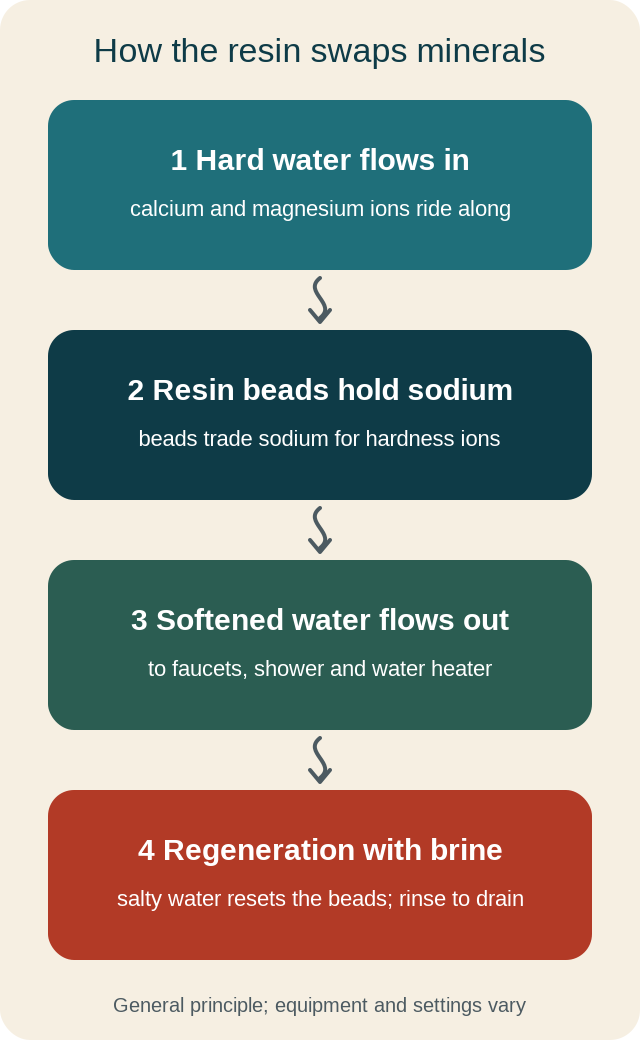
The short tank beside the softener is the brine tank. Salt dissolves in a small amount of water there to make a strong brine. During regeneration the control valve draws that brine through the resin. There is so much sodium in the brine that it pushes the calcium and magnesium off the beads, recharging them. The hardness minerals and leftover brine then rinse down the drain.
Most modern softeners regenerate based on metered water use rather than a fixed timer, which saves salt and water. Equipment and settings vary from one softener to the next, so treat this as the general process rather than a description of any one model. Regeneration usually happens overnight when nobody is using much water, because water drawn during the cycle may bypass the resin.
This also explains why salt problems matter. If a salt bridge or mush stops brine from forming, the resin never recharges, and hard water returns even though the tank looks full.

Calcium and magnesium drop to very low levels. Scale build-up slows, soap lathers more easily, and spotting on dishes and fixtures falls off.

Bacteria, nitrate, lead and most taste or odor issues are not removed by ion exchange. Large amounts of iron foul the resin; see the iron filter page.
Softened water contains a little more sodium than before. The Minnesota Department of Health’s 2022 guidance suggests that people on sodium-restricted diets ask their doctor, and many homes keep one unsoftened cold tap in the kitchen for drinking.
A softener only works as well as its settings. The hardness value programmed into the control valve should match a recent test of your water. Too high, and the unit regenerates more often than needed and wastes salt. Too low, and hardness slips through between cycles.
Resin lasts many years, but chlorine in treated water and iron in well water both wear it over time. If a softener that used to work well starts letting hardness through even with plenty of salt, the resin may be tired. The two-week check helps separate a settings issue from worn resin.
Keep the salt level steady, clean the brine tank when residue builds up, and retest once a year. Those three habits cover most of what keeps ion exchange running smoothly.
Sources: Penn State Extension, Water Softening (2025); Minnesota Department of Health, Home Water Softening (2022).
Many softeners accept potassium chloride. It costs more and may need a settings change, so check the owner manual first.
Regeneration is usually scheduled for low-use hours so the household is not drawing water while the resin recharges.
Many people notice a smoother feel because soap rinses differently without hardness minerals. That is normal.
A two-week check that separates a dead softener from a tired one.
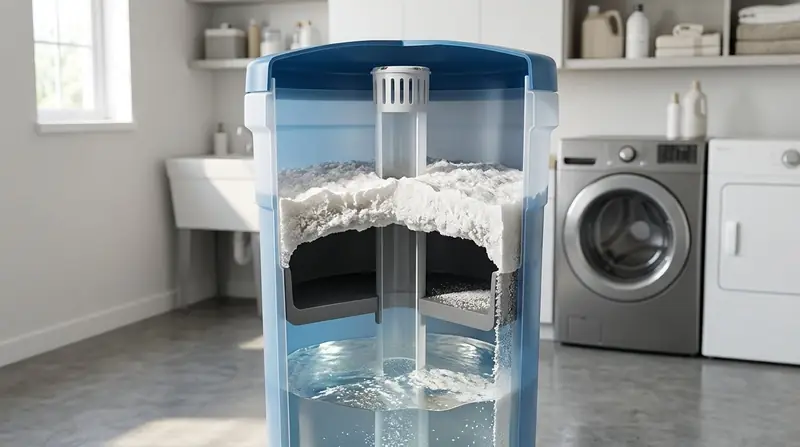
Find the crust, break it safely and stop the next one forming.
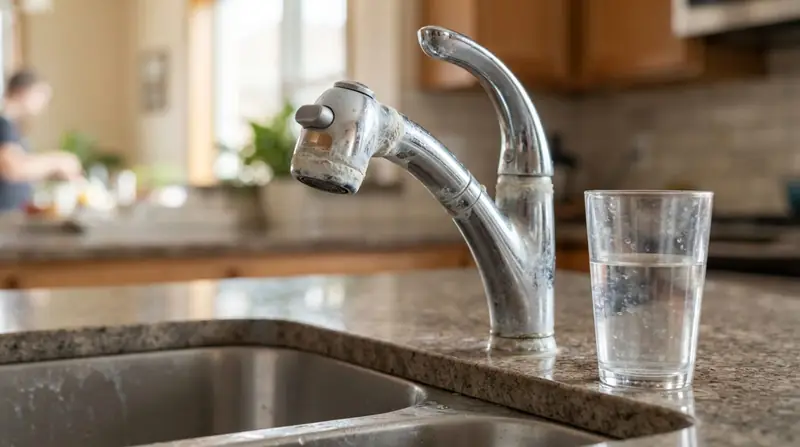
Read the white spots, then measure before you buy.
Get in touch
Call with a recent test result. We also install and replace softeners when settings are not the problem.
Call 262-671-3513 Map location: 611 56th St Kenosha, WI 53140Send a message
Share your question and contact details in the form below.